
Better kitchens. Stronger teams. Better business.
Practical culinary expertise and operational leadership for restaurants. Location: New York, USA. Working hands-on with independent restaurants and multi-unit groups across New York City and Long Island to refine kitchen systems, train culinary teams, and safeguard restaurant profitability.
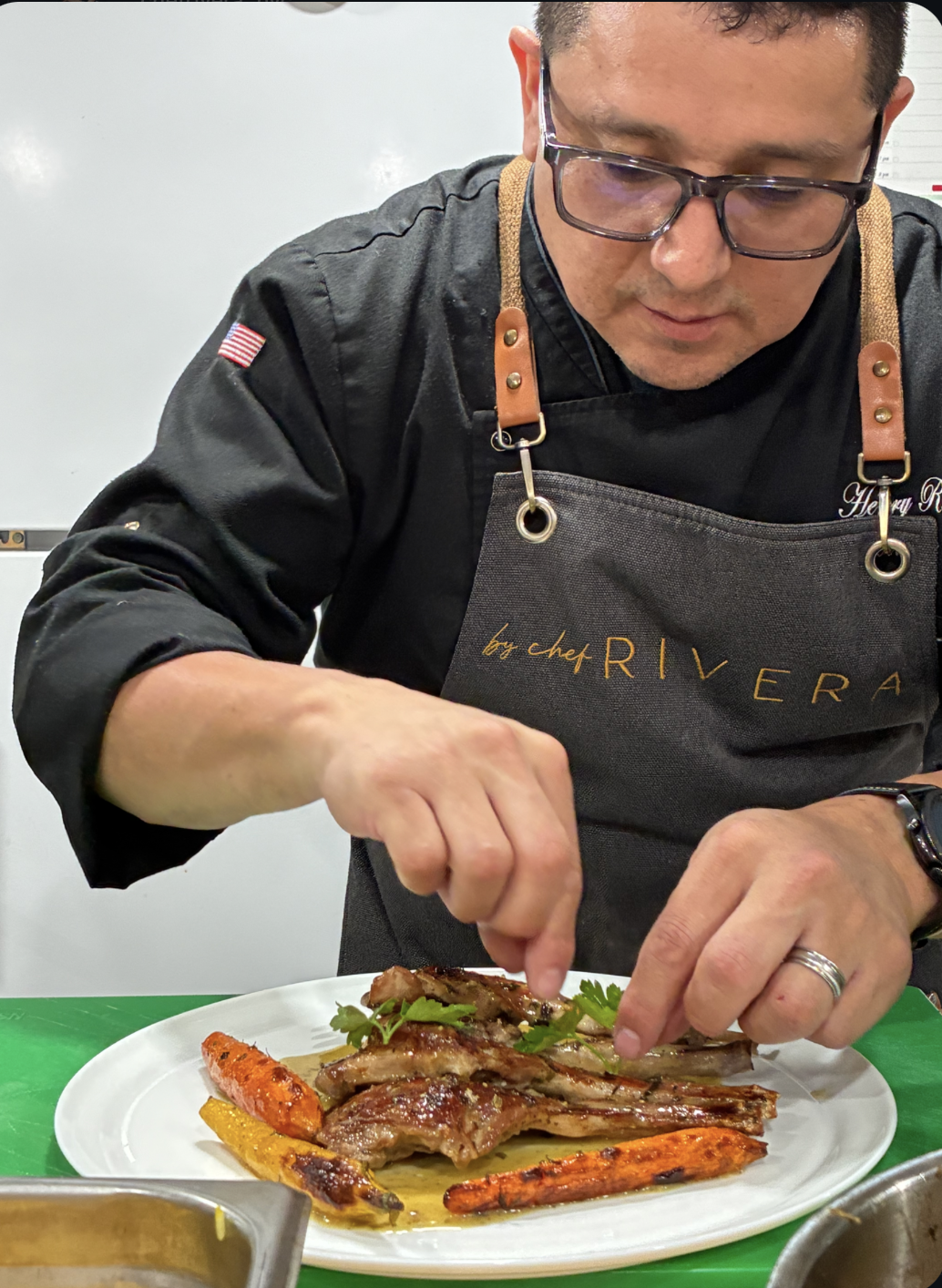
Great food needs a strong operation.
A memorable dining room experience begins long before service starts. Chef Rivera helps restaurants improve food quality, strengthen kitchen teams, control costs, and create better dining experiences.
Too often, restaurants struggle with high kitchen turnover, fluctuating plate consistency, and unexplained ingredient waste. Chef Rivera delivers practical solutions for menu direction, kitchen consistency, and restaurant operations—working alongside line cooks and owners on the line to establish habits that endure.
Built for the realities of modern restaurant operators.
Whether you operate a single neighborhood dining room or a multi-unit hospitality group, our engagements are tailored to your stage of growth.
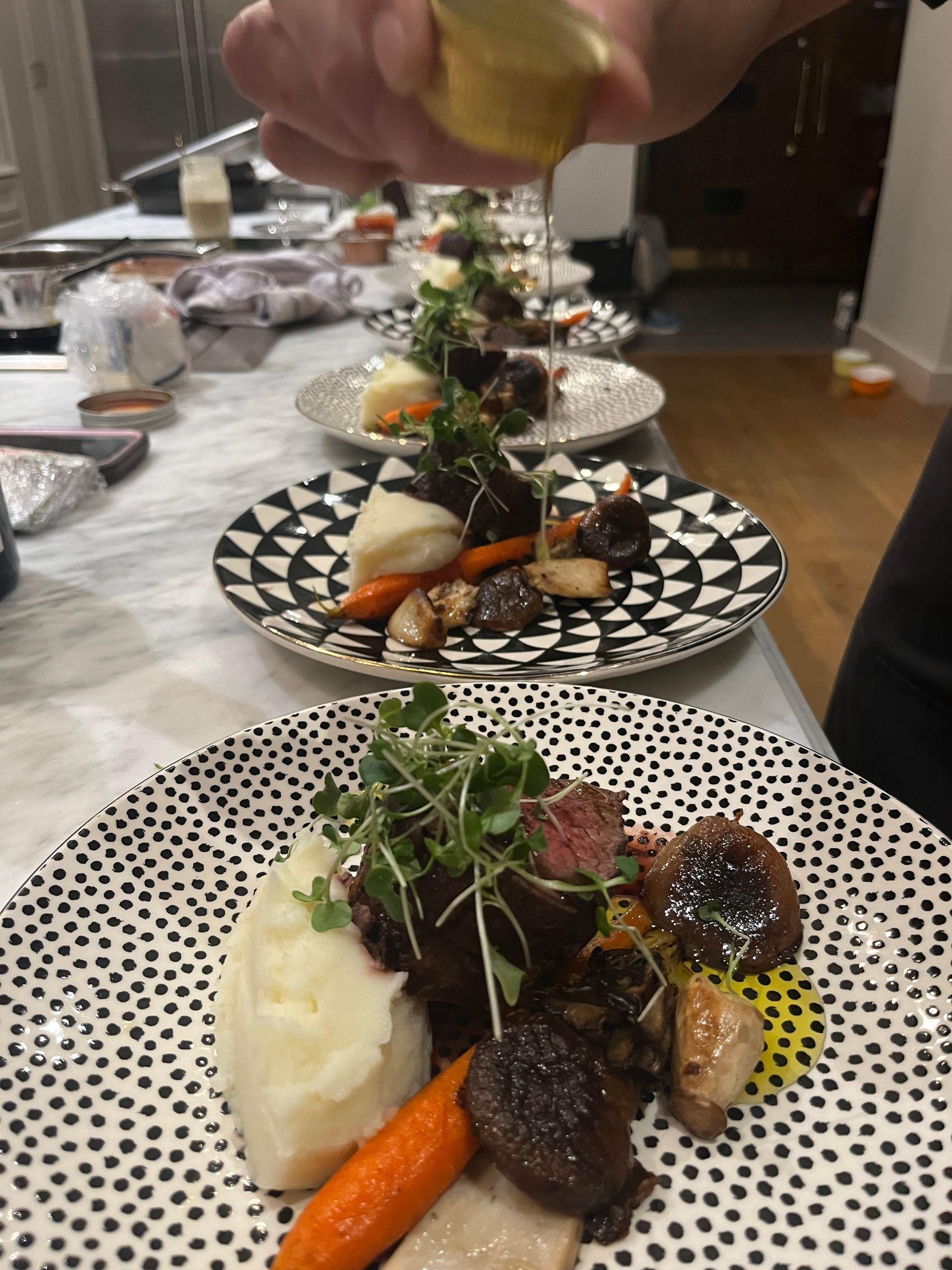
“Get back in control.”
For owner-operators facing inconsistent food execution, unexplained waste, eroding menu margins, disorganized prep stations, and team turnover.
“Consistency at every location.”
For growing multi-unit operators requiring standardized recipes, operational playbooks, structured menu rollouts, and executive chef training across properties.
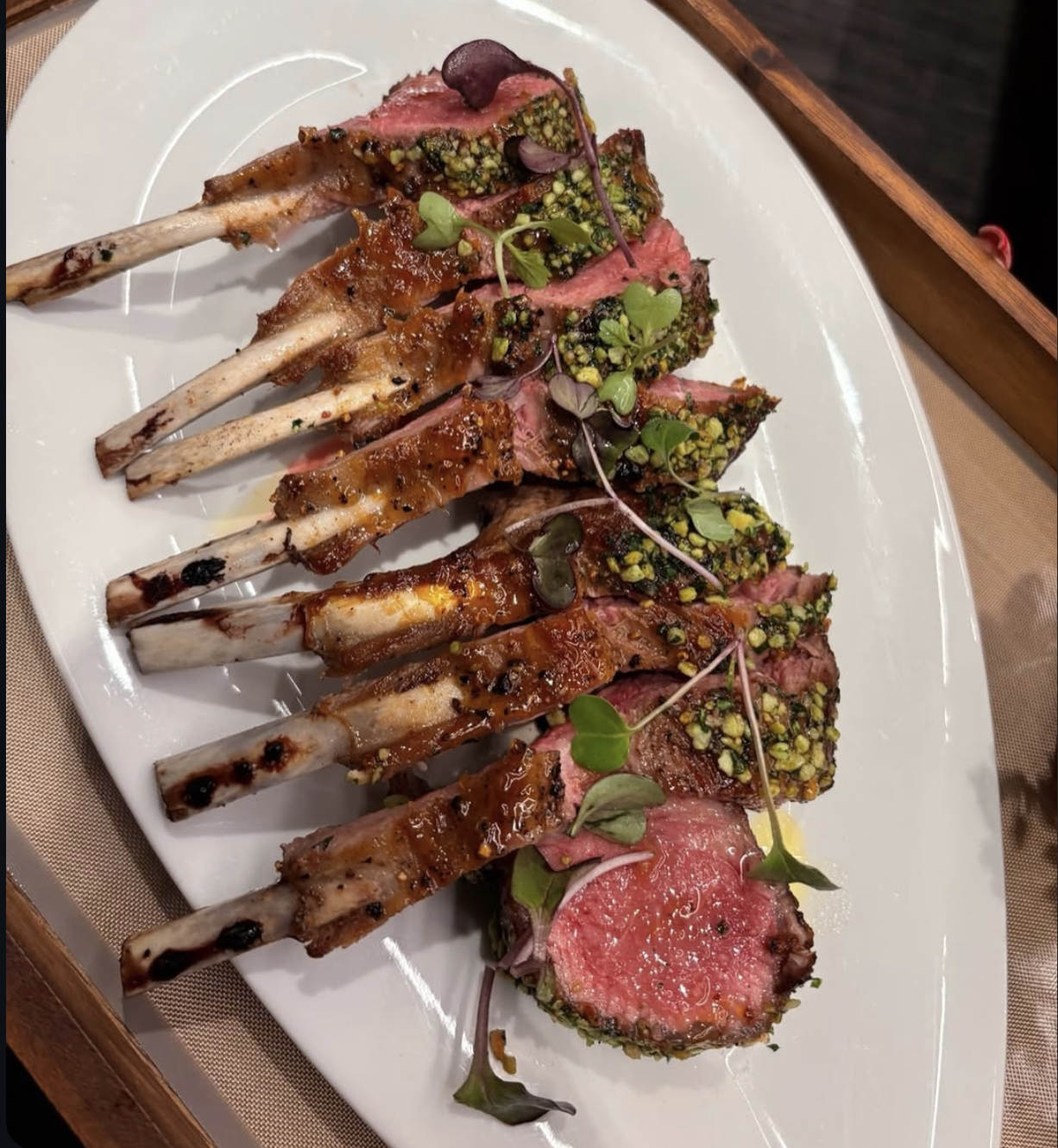
“Open with a clear plan.”
For hospitality entrepreneurs launching a new concept who need experienced menu development, kitchen workflow planning, team preparation, and hands-on opening support.
Services & Pricing
Clear deliverables. Agreed timelines. No ambiguous billable hours.
Culinary Assessment
- ✓Menu and selected food-cost review
- ✓Kitchen workflow and food execution observation
- ✓Portion, waste, prep and organization review
- ✓Written action plan with five priorities
- ✓Owner follow-up discussion
- ✓Extensive financial analysis quoted separately
Kitchen Performance Improvement
Hands-on operational coaching to streamline station workflows, eliminate prep bottlenecks, and establish consistent culinary execution across your line.
Restaurant Opening & Culinary Launch
Comprehensive culinary launch leadership from concept refinement and recipe documentation to back-of-house training and opening-week kitchen execution.
Fractional Culinary Director
Ongoing executive culinary leadership providing regular on-site guidance, menu rollouts, chef mentoring, and standards enforcement across locations.
Engagement & Payment Terms
Culinary creativity. Operational discipline.
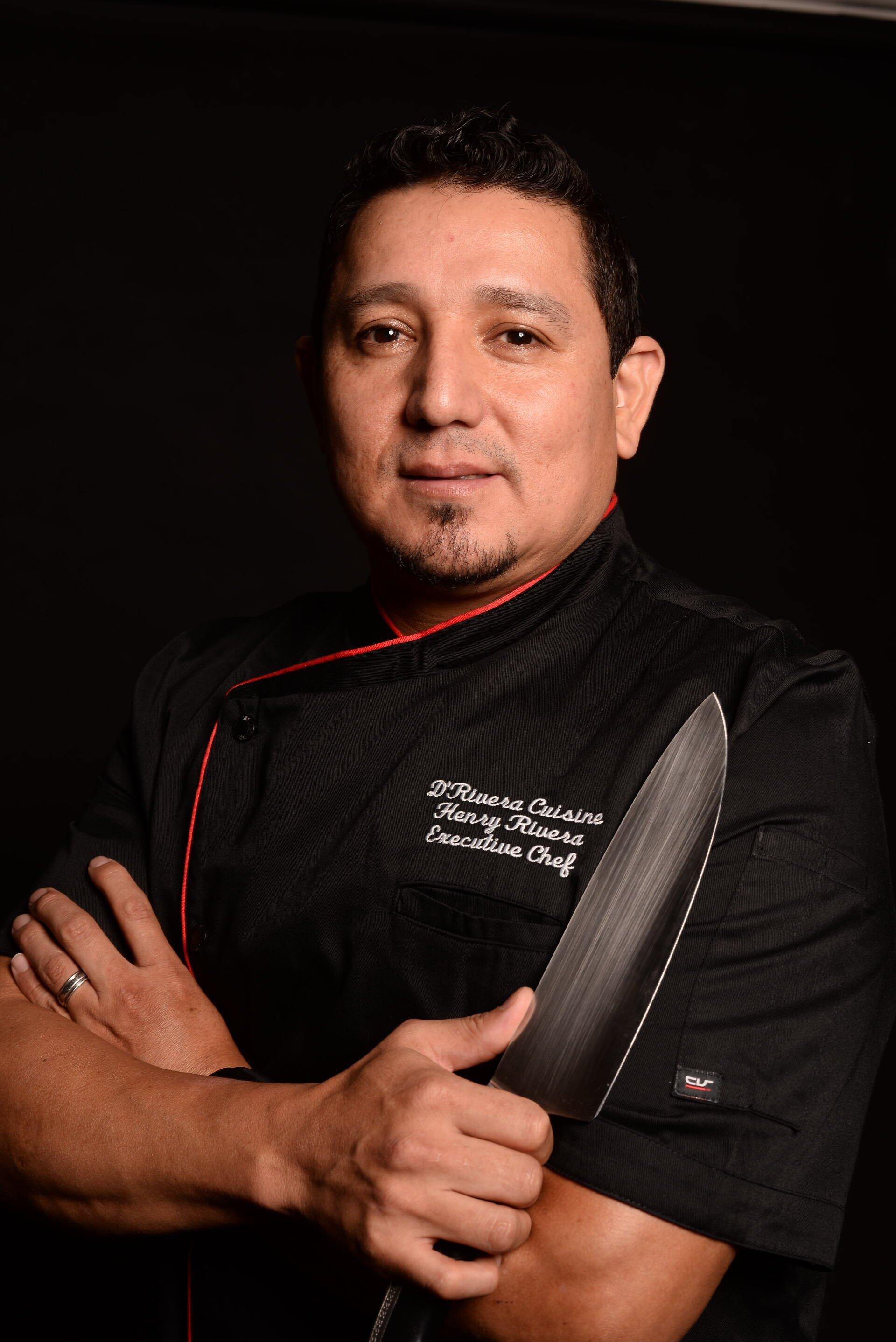
With more than 30 years of culinary experience, Chef Henry Rivera brings seasoned, practical kitchen expertise to every restaurant partnership. His career includes culinary direction with the Fireman Hospitality Group, overseeing high-volume operations across New York City and mentoring scores of sous chefs and line cooks.
Henry specializes in menu development, chef leadership, restaurant openings, and practical kitchen systems. Rather than delivering abstract presentations from an office, he steps into your kitchen to build stronger teams, consistent food, and sustainable operating practices that stand up under high-volume pressure.
A structured approach to kitchen transformation.
Every restaurant has unique hurdles. We follow a clear, predictable four-stage framework to assess, align, execute, and monitor progress.
Assess — Listen first
A 15–20 minute discovery conversation about challenges, goals and timeline, followed by an agreed assessment.
Plan — Set priorities
A written proposal outlining operational needs, deliverables, fees and timeline.
Implement — Work hands-on
Improve recipes, workflows, kitchen standards and team execution through coaching.
Measure — Track progress
Review agreed indicators such as food cost, waste, portion consistency and team execution.
“The spreadsheet shows you the numbers. The work in the kitchen changes them.”
— Chef Henry Rivera
Food-cost control starts with standardized recipes, smart schedules, organized preparation, and trained teams. Real kitchen profit is protected through daily discipline across three critical areas:
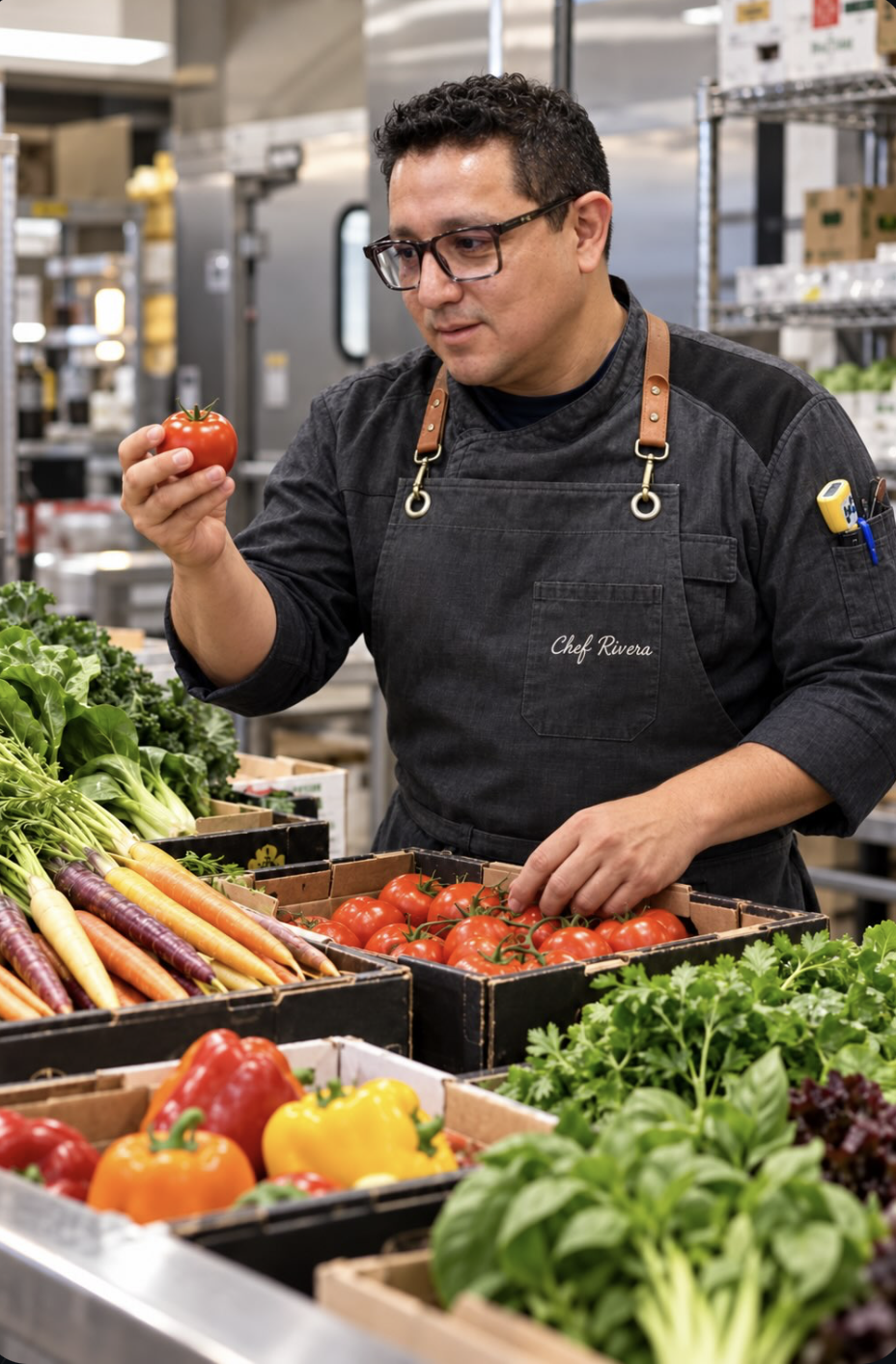
At the receiving door
Check quality, weight, price, and incoming products against invoice terms before cases hit walk-in shelves.
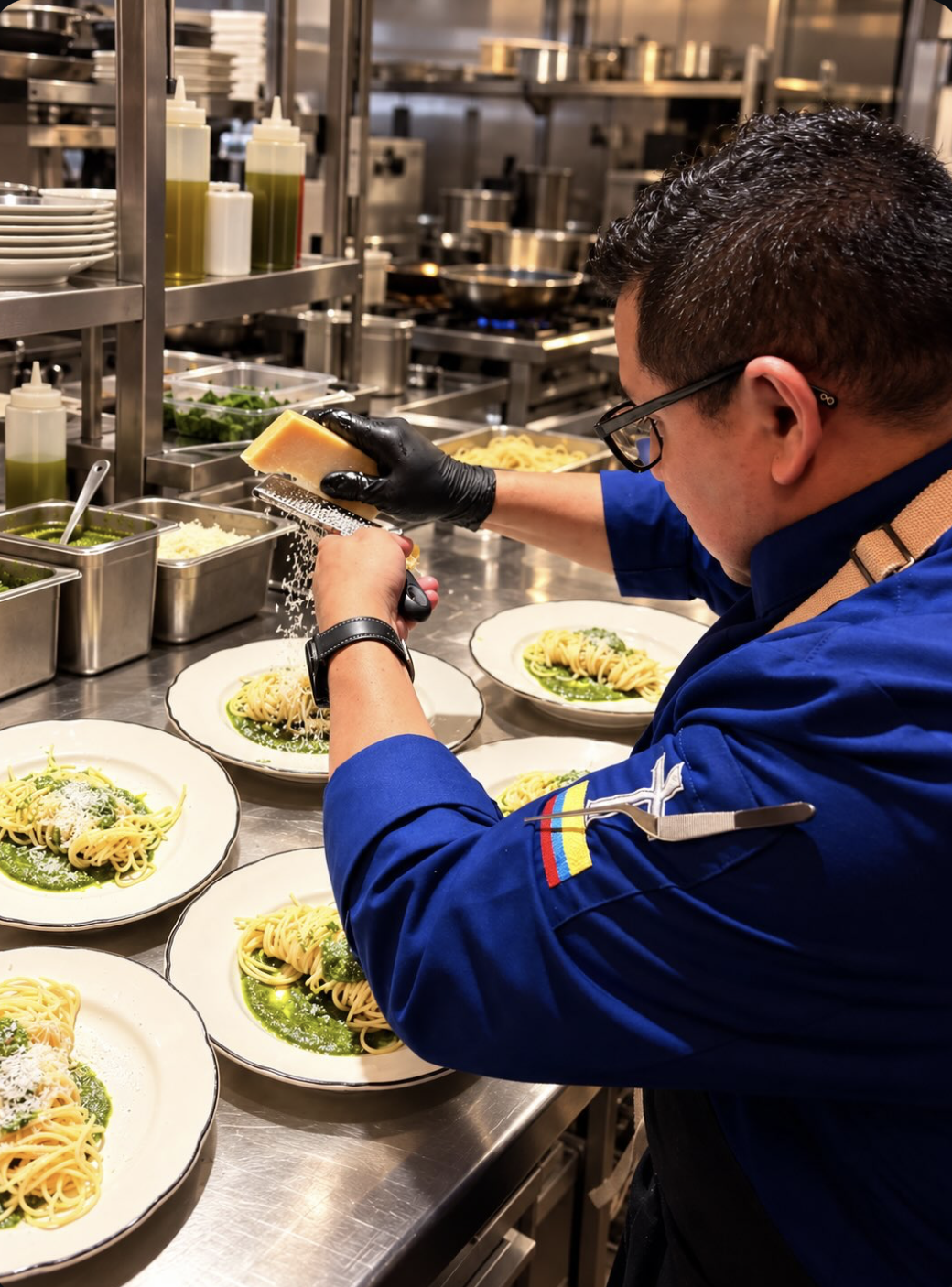
At the prep table
Control yield, organize batch production, and reduce trim and overproduction waste through clear prep sheets.
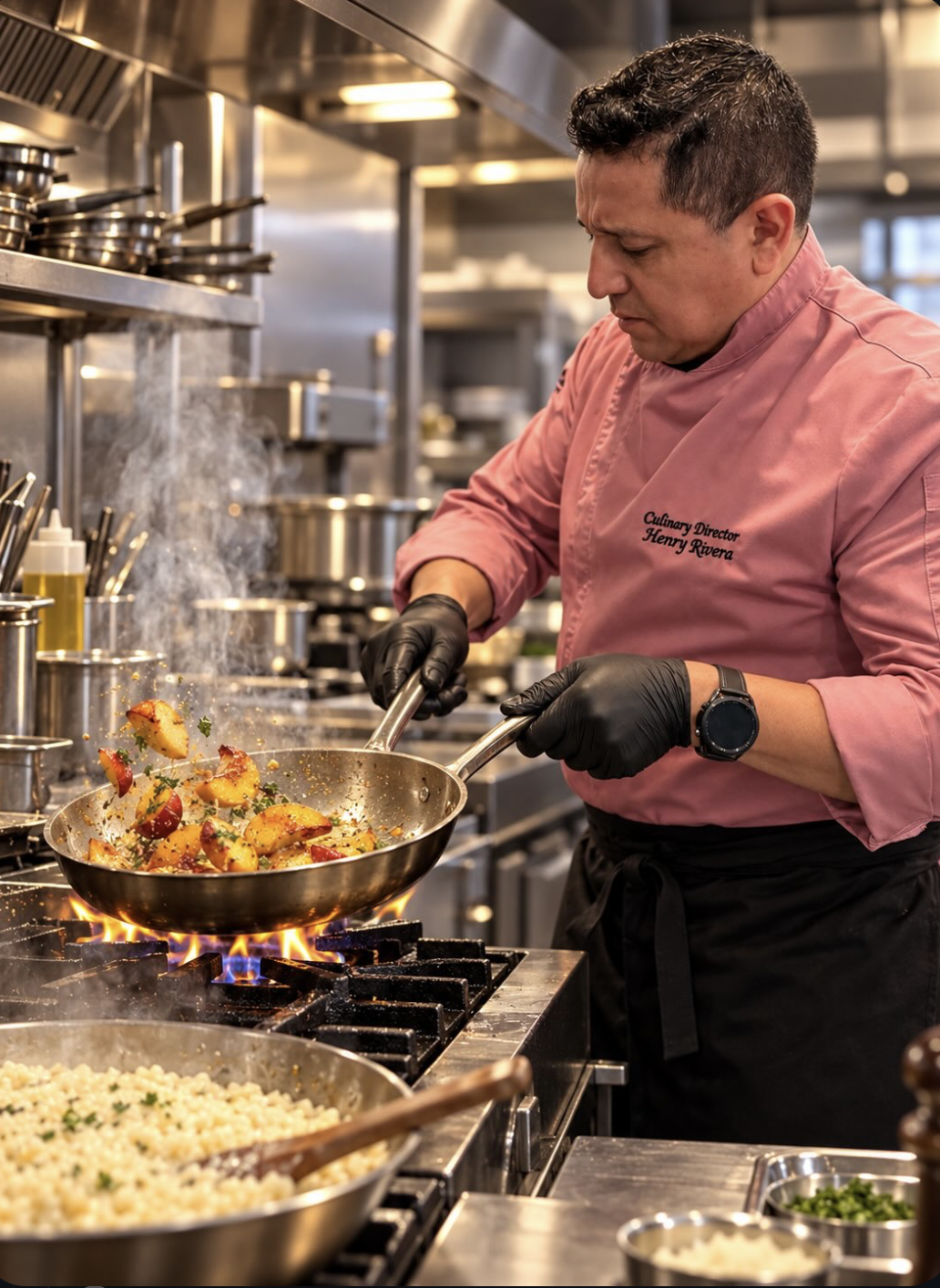
At the sauté station
Maintain consistent portions using scales, sharp knives, and clear plating standards during high-volume dinner rushes.
Food-Cost Targets by Restaurant Type
Understanding realistic food cost ranges for your dining category is the foundation of disciplined restaurant financial planning.
| Concept | Planning Range |
|---|---|
| Fine dining / upscale restaurant | 30%–35% |
| Casual dining | 28%–32% |
| Steakhouse | 35%–40% |
| Italian restaurant | 28%–33% |
| Seafood restaurant | 32%–38% |
| Fast casual / quick service | 28%–32% |
| Catering / events | 30%–35% |
Note: These are general planning ranges, not universal standards. Labor, rent, pricing, waste, and beverage revenue affect profitability.
On $100,000 monthly food sales, a 4% difference in food cost equals $4,000 in monthly cash flow:
These figures represent food spend only. Labor, rent, utilities, and other operating expenses must be budgeted separately.
Theoretical food cost
Expected cost based on standardized recipes and portion weights multiplied by actual item sales mix.
Actual food cost
Actual food usage calculated from beginning inventory, purchases, ending inventory, and food sales over the period.
Food-cost variance
Difference between actual and theoretical food cost, potentially revealing waste, over-portioning, spoilage, or inventory problems.
A restaurant with a 30% food cost is not necessarily more profitable than one with a 33% food cost. Menu pricing, labor productivity, and overall operating expenses also matter.
Interactive Food-Cost Calculator
Model your monthly food spend targets using your restaurant's sales volume and beverage mix.
How to control food cost in a fine-dining kitchen
Fine-dining kitchens handle high-cost proteins, delicate produce, and intensive labor. Controlling food cost requires systemic discipline that protects culinary standards.
Standardized recipes and portions
Cost recipes down to the gram; establish precise weights and butcher yields; specify clear plating standards; and mandate scales at prep and line stations for expensive proteins and portion-sensitive ingredients.
Purchasing and receiving controls
Verify invoice prices, delivery weights, product freshness, and supplier credit slips at the back door. Closely monitor premium seafood, dry-aged beef, and other high-cost specialty items before acceptance.
Prep forecasting and waste reduction
Forecast daily production using reservation pacing and historical sales data; track spoilage, butcher trim, overproduction, and returned dishes daily; and utilize safe cross-utilization across specials to eliminate waste.
Menu engineering & contribution margin
Evaluate selling price, ingredient cost, contribution margin, and item popularity. A dish with a higher food-cost percentage can still generate significantly more cash contribution dollars for your business.
A $48 Dry-Aged Ribeye with a 35% food cost ($16.80 cost) yields a $31.20 contribution margin. A $28 Cavatelli with a lower 25% food cost ($7.00 cost) yields a $21.00 margin. Even though the pasta has a lower percentage, the ribeye puts $10.20 more cash into your bank account.
Measure theoretical versus actual food cost.
Seven essential metrics Chef Rivera monitors to identify operational leaks and stabilize kitchen profitability:
If the food-cost target is 30% of food sales and food represents 75% of total revenue, food cost equals 22.5% of total restaurant revenue.
What's holding your kitchen back?
Tell Chef Rivera about your restaurant and the changes you want to make.